When AI Hits ‘Pay’: AI Agents at the Checkout
AI agents can now shop and pay for people. I look at how card networks keep these payments safe, and who is responsible when an agent gets it wrong.
For as long as most of us have worked in payments, a payment started with a person: someone tapping a card, scanning a QR code or pressing ‘confirm’ in an app. That is changing. AI agents can now search, compare, fill a cart and pay for a customer, within limits the customer sets.
This raises some basic questions. Who is really paying? Did the customer agree to this purchase, at this price, from this shop? And who is responsible when the agent gets it wrong?
The card networks moved early. Mastercard launched Agent Pay in April 2025, built on special ‘agentic tokens’, and Visa announced Visa Intelligent Commerce the same month. In September 2025 Google launched the Agent Payments Protocol (AP2), an open standard with more than 60 partners. In 2026 these have moved from trials to real use, and the networks now give shops one simple way to accept payments started by agents.
How agent payments work
1. Knowing the agent
A shop has to be able to tell a trusted shopping agent from a bad bot. Schemes such as Visa’s Trusted Agent Protocol give agents digital credentials the shop can check at checkout.
2. Tokens instead of card numbers
The agent never sees the real card number. It gets a token that works only for that agent, and often only for certain shops, amounts or dates. A stolen token is useless anywhere else.
3. Proof of what the customer wanted
AP2 uses digitally signed ‘mandates’. An intent mandate records what the customer asked for, say ‘running shoes under $120’. A cart mandate confirms the exact items and price, and a payment mandate tells the card network and the bank that an agent was involved. Together they leave a clear record if there is a dispute.
4. Checks and limits
Customers set spending limits, approved shops and rules for when they must be asked, and banks can still ask for a fingerprint, face scan or passkey when a payment looks risky.
What it means for the industry
Banks’ fraud systems will have to learn how agents behave. For shops, checkout is becoming something agents connect to directly. Payment companies need to pass new data along the whole chain, and it is still unclear who pays for an agent’s mistakes.
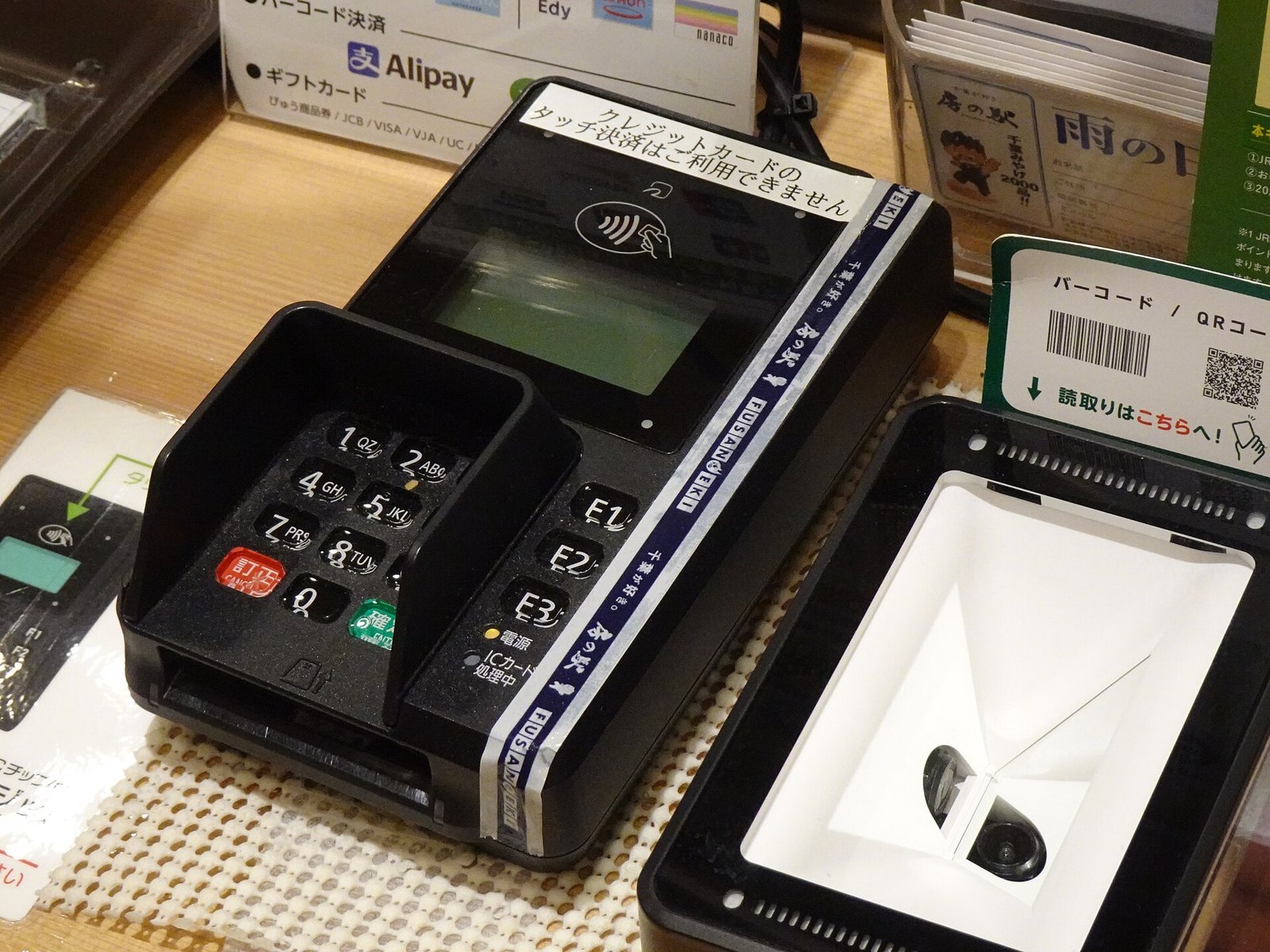
Photo: Card and QR-code payment terminals in Japan, by RuinDig/Yuki Uchida, Wikimedia Commons, CC BY 4.0.
This article first appeared in Payment Samachar, Edition 3 (November 2026).